
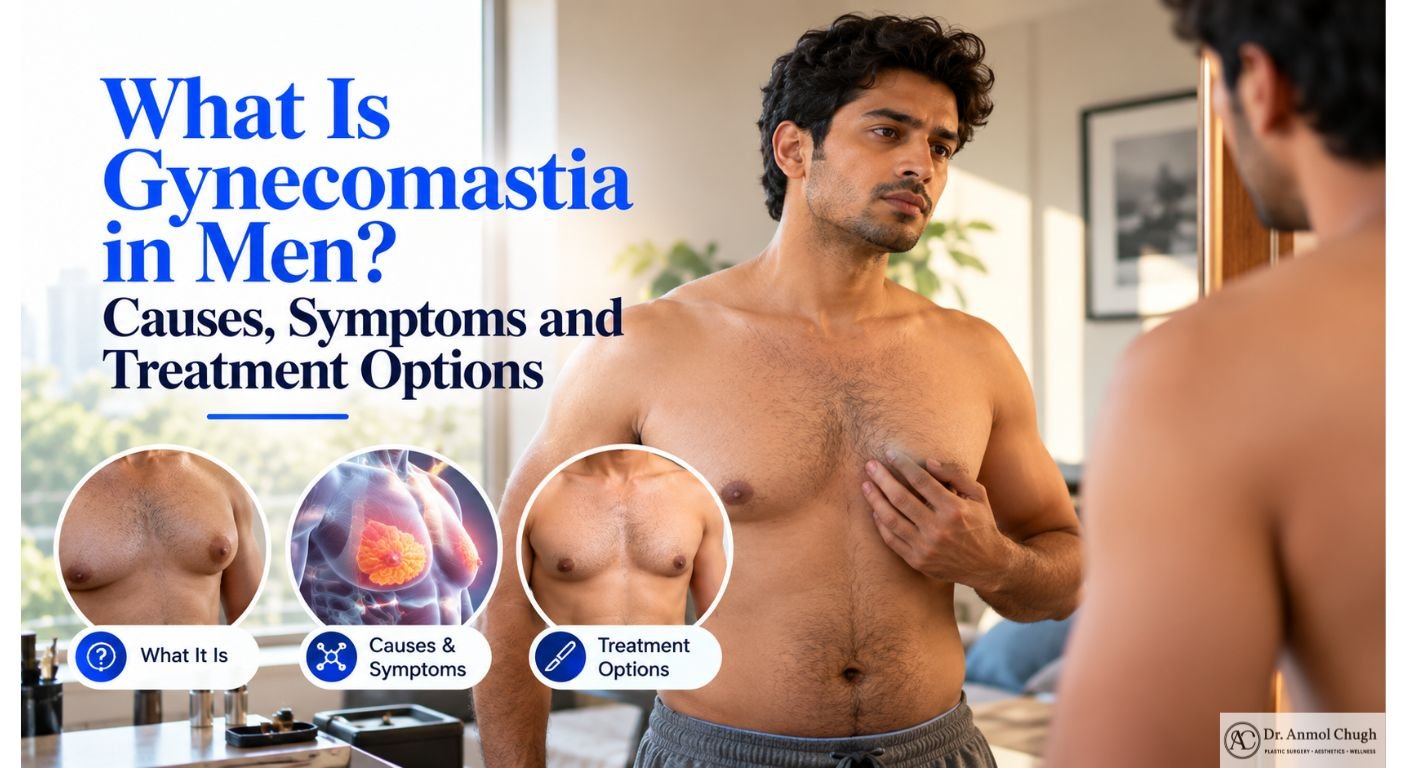
What Is Gynecomastia in Men? Causes, Symptoms and Treatment Options
For some men, the first sign of gynecomastia is noticing a small swelling behind the nipple. For others, it may be a fuller chest that does not change even after losing weight or exercising regularly.
This can be frustrating. Many men start doing more chest exercises, follow strict diets or try to hide their chest under loose clothing. Some also feel uncomfortable taking their shirt off at the gym, swimming pool or beach.
If you have experienced this, you are not alone.
Gynecomastia in men is a common condition in which male breast glandular tissue becomes enlarged. It can affect one or both sides of the chest and may occur at different stages of life.
The good news is that gynecomastia is usually not dangerous. However, it is important to understand why it has developed before deciding how to treat it.
What Is Gynecomastia in Men?
Gynecomastia means enlargement of breast glandular tissue in a male.
The condition is usually related to a change in the balance between two hormones: testosterone and estrogen. Men naturally have both hormones, but testosterone is normally present at a much higher level. When this balance changes, breast gland tissue can grow.
Gynecomastia may appear as:
- A firm or rubbery lump beneath the nipple
- Swelling around the nipple or areola
- Increased fullness of the chest
- Tenderness or sensitivity
- Enlargement on one side or both sides
The amount of enlargement can vary greatly from one person to another. It is also important to understand that not every case of a larger male chest is true gynecomastia.
Gynecomastia vs Male Chest Fat
One of the most common questions I hear is: “Doctor, is this gynecomastia or just chest fat?”
These are NOT the same thing.
True gynecomastia involves an increase in glandular breast tissue.
Pseudogynecomastia, on the other hand, mainly involves excess fatty tissue around the chest. It is more commonly seen in men who are overweight or have gained significant body fat.
Sometimes a man can have both glandular tissue and excess fat.
This distinction matters because the treatment may be different. Losing weight can reduce excess chest fat, but exercise and weight loss cannot directly remove established glandular breast tissue.
What Causes Gynecomastia in Men?
The most common reason is a change in the hormonal balance between testosterone and estrogen. This can happen naturally during certain stages of life.
1. Puberty
Gynecomastia is relatively common during puberty because hormone levels are changing rapidly. In many teenage boys, the enlargement gradually reduces as hormone levels settle. It may take months or sometimes longer to resolve.
For this reason, immediate surgery is not always appropriate for a teenager. Observation and medical assessment may be recommended first.
2. Ageing
As men get older, testosterone levels may decrease while other hormonal changes occur. Gynecomastia can therefore become more noticeable in later adulthood.
3. Being Overweight
Excess body fat can increase the appearance of a larger chest. Fat tissue can also influence hormone balance, which means some men may have both pseudogynecomastia and true gynecomastia.
Weight management is therefore an important part of evaluating the condition.
4. Medicines
Some medicines can contribute to gynecomastia.
Examples include certain medicines used for prostate problems, heart conditions and other medical conditions. This does not mean you should stop a medicine on your own.
If you suspect that a medication is contributing to breast enlargement, discuss it with the doctor who prescribed it.
5. Anabolic Steroids
Anabolic steroids are another important cause. Some men use steroids to increase muscle size or improve athletic performance. These substances can interfere with the body’s natural hormone balance and may contribute to breast gland enlargement.
6. Medical Conditions
Less commonly, gynecomastia may be associated with medical conditions affecting hormone production or metabolism.
These can include:
| Low testosterone | Thyroid disorders |
| Liver disease | Kidney disease |
| Certain testicular or adrenal conditions | Other hormonal disorders |
This is why a proper medical assessment is more useful than assuming every enlarged male chest is simply a cosmetic problem.
What Are the Symptoms of Gynecomastia?
The most obvious symptom is increased breast or chest volume.
Some men also notice:
| A lump or firm tissue beneath the nipple | Nipple sensitivity |
| Breast tenderness | Swelling |
| Uneven chest appearance | Enlargement on one side |
| Difficulty hiding the chest under clothing | |
The emotional impact can sometimes be greater than the physical symptoms. A man may avoid fitted T-shirts, gym workouts, swimming, photographs or social situations because he feels uncomfortable about his chest.
This is a real concern and should not be dismissed.
When Should You See a Doctor?
Most cases of gynecomastia are benign, but new or unusual breast changes should be assessed. Please seek medical advice if you notice:
- A new or hard breast lump
- Rapid enlargement
- Persistent pain or tenderness
- Nipple discharge or bleeding
- Skin dimpling or other unusual skin changes
- Significant enlargement of only one breast
- A change that appears suddenly
These symptoms do not automatically mean something serious is happening. They simply deserve proper evaluation.
Male breast cancer is uncommon, but a doctor may need to distinguish gynecomastia from other causes of breast enlargement or a breast lump.
How Is Gynecomastia Diagnosed?
Diagnosis usually begins with a detailed medical history and physical examination. Your doctor may ask about:
- When the enlargement started
- Whether one or both sides are affected
- Medicines and supplements you take
- Steroid use
- Weight changes
- Other health conditions
- Hormonal symptoms
Depending on your history and examination, blood tests or imaging may be recommended. Not every patient needs every test. The investigation should be based on the individual situation.
Can Gynecomastia Go Away on Its Own?
Sometimes, yes. Gynecomastia associated with puberty may gradually improve as hormone levels settle. Newborn gynecomastia can also resolve naturally.
However, long-standing gynecomastia in adults may persist. This is particularly important when the glandular tissue has been present for a long time and has become more established.
That is why the correct treatment depends on factors such as age, duration, cause, amount of glandular tissue, amount of fat and skin excess.
Can Exercise Cure Gynecomastia?
This is one of the biggest misconceptions.
Exercise is excellent for overall health and can reduce body fat. If the chest enlargement is mainly caused by excess fat, losing weight may improve the appearance considerably.
But if the problem is true gynecomastia caused by glandular tissue, chest exercises cannot simply make the gland disappear.
So if you have been exercising for months and still have a firm enlargement behind the nipple, it is worth getting the chest examined rather than assuming you need to work out harder.
What Are the Treatment Options for Gynecomastia?
Treatment depends on the cause and how long the condition has been present.
• Observation
If gynecomastia has developed recently, particularly during puberty, observation may be appropriate. If a medication or medical condition is contributing to the enlargement, treating the underlying cause may also help.
• Weight Management
If excess body fat is contributing to the appearance, improving diet, exercise and overall weight management may help.
However, weight loss does not necessarily remove established glandular tissue.
• Medication
In selected cases, doctors may consider medication, particularly when gynecomastia is recent and related to hormonal changes.
Medication is not appropriate for every patient and should only be considered after medical evaluation.
• Gynecomastia Surgery
For men with persistent gynecomastia who remain bothered by the appearance of their chest, surgery may be considered.
The surgical approach depends on what is causing the enlargement. Liposuction can be useful when excess fatty tissue is an important component.
Glandular tissue removal may be required when there is significant breast gland enlargement. Some patients may need a combination approach. The chest needs to be assessed as a whole so that the result looks proportionate and natural.
Who May Be a Good Candidate for Gynecomastia Surgery?
Surgery may be considered when:
- Breast enlargement has persisted
- The underlying cause has been evaluated
- Weight is reasonably stable
- Exercise has not corrected the problem
- The chest causes significant embarrassment or discomfort
- The patient has realistic expectations
- The person is medically fit for surgery
A consultation is important because two men with apparently similar chests may require completely different treatment plans.
Who Should Delay or Avoid Surgery?
Surgery may need to be delayed when:
- The underlying hormonal problem has not been investigated
- A medication or medical condition may be causing the enlargement
- Weight is changing significantly
- The patient has unrealistic expectations
- There are untreated medical problems that increase surgical risk
The decision should always be individualized.
What I Commonly See in My Practice
One of the most common mistakes men make is assuming that every enlarged chest is simply fat.
I also see men who spend months doing chest workouts because they believe more exercise will remove the problem.
Another common mistake is trying supplements or hormonal products without understanding the cause.
My approach is to first understand what is actually creating the chest enlargement. Is it fat? Glandular tissue? Both? Is there loose skin? Has the condition been stable? Are there medications or hormonal factors that need attention?
Only after answering these questions can we discuss the most suitable treatment.
What I Tell My Patients in Consultation
I usually tell patients that the goal is not to create an artificially flat chest. The goal is a natural-looking male chest that is proportionate to the rest of the body.
Every patient has a different chest shape, amount of glandular tissue, skin quality and body-fat distribution.
It is also important to understand that surgery has limits. The final result depends on the starting anatomy, tissue quality, healing and following the postoperative instructions.
What About Recovery After Gynecomastia Surgery?
Recovery depends on the procedure performed and the individual patient.
Most patients need some initial rest and should avoid strenuous physical activity during the early healing period.
Swelling and bruising can occur after surgery and gradually improve.
A compression garment may be recommended depending on the surgical plan.
The exact timeline for returning to exercise, gym workouts and other activities should be provided by your surgeon because recovery is not identical for every patient.
Risks of Gynecomastia Surgery
As with any surgery, gynecomastia surgery has potential risks. These can include:
| Swelling | Bruising |
| Infection | Bleeding |
| Fluid collection | Changes in sensation |
| Contour irregularities | Scarring |
| Asymmetry | Need for revision surgery |
A consultation should include a discussion of both benefits and limitations before you decide to proceed.
Safety Checklist Before Treatment
Before considering treatment, ask:
- Do I have true gynecomastia or mainly chest fat?
- How long has the enlargement been present?
- Could a medicine or medical condition be contributing?
- Is my weight stable?
- Do I need any blood tests or imaging?
- What treatment is appropriate for my chest?
- What are the possible risks?
- What should I expect during recovery?
- What result is realistically achievable?
These questions can make the consultation much more useful.
Frequently Asked Questions
1. What is gyno in men?
“Gyno” is a common short term for gynecomastia, which means enlargement of male breast glandular tissue.
2. Can gynecomastia go away naturally?
Yes, some cases, especially those related to puberty, can improve naturally. Long-standing adult gynecomastia may persist.
3. Can weight loss remove gynecomastia?
Weight loss can reduce excess chest fat, but it may not remove established glandular breast tissue.
4. Is gynecomastia dangerous?
Most gynecomastia is benign. However, a new lump, nipple discharge, skin changes or sudden breast enlargement should be evaluated by a doctor.
5. Is gynecomastia surgery permanent?
Surgery removes the tissue responsible for the enlargement, but maintaining a stable weight and addressing underlying causes is important for a lasting result.
Final Thoughts
Gynecomastia in men is common, treatable and nothing to be embarrassed about.
The first step is understanding what is causing the chest enlargement. Sometimes observation or treatment of an underlying problem is enough. In other cases, persistent glandular tissue may require surgical correction.
If your chest has remained enlarged despite exercise and weight loss, do not assume that you simply need to work harder at the gym. A proper examination can help determine whether you have gynecomastia, pseudogynecomastia or a combination of both.
The right treatment should be based on your anatomy, health, expectations and the cause of the enlargement.